How to Refuel a Generator Safely
By the Generator Size Calculator Team · Updated · 5 min read
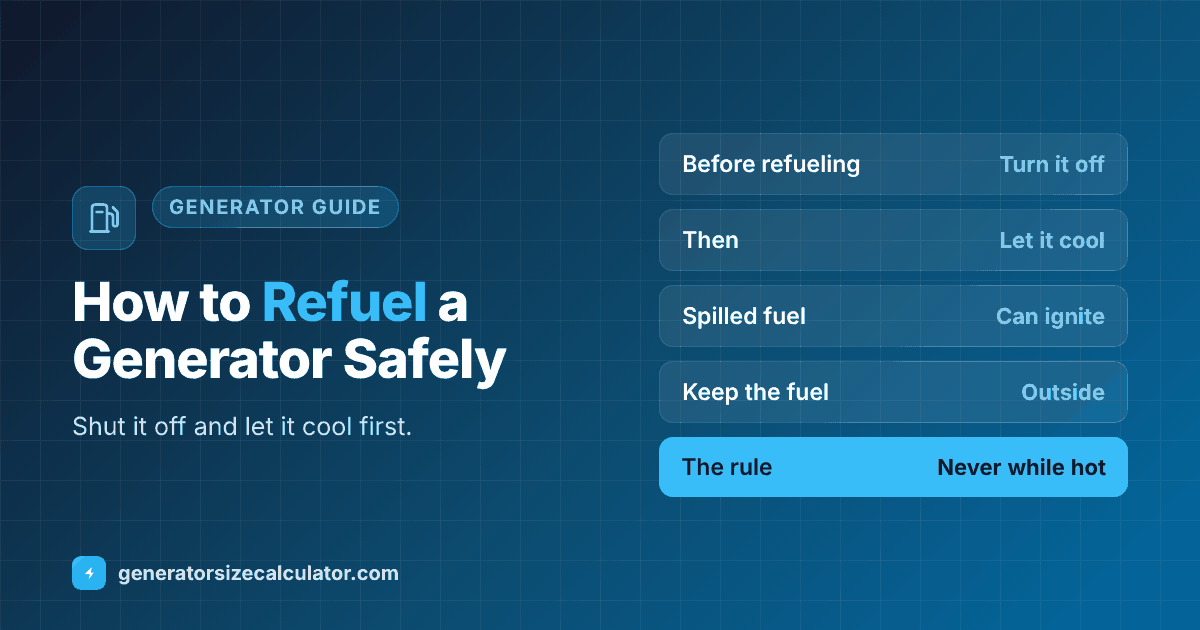
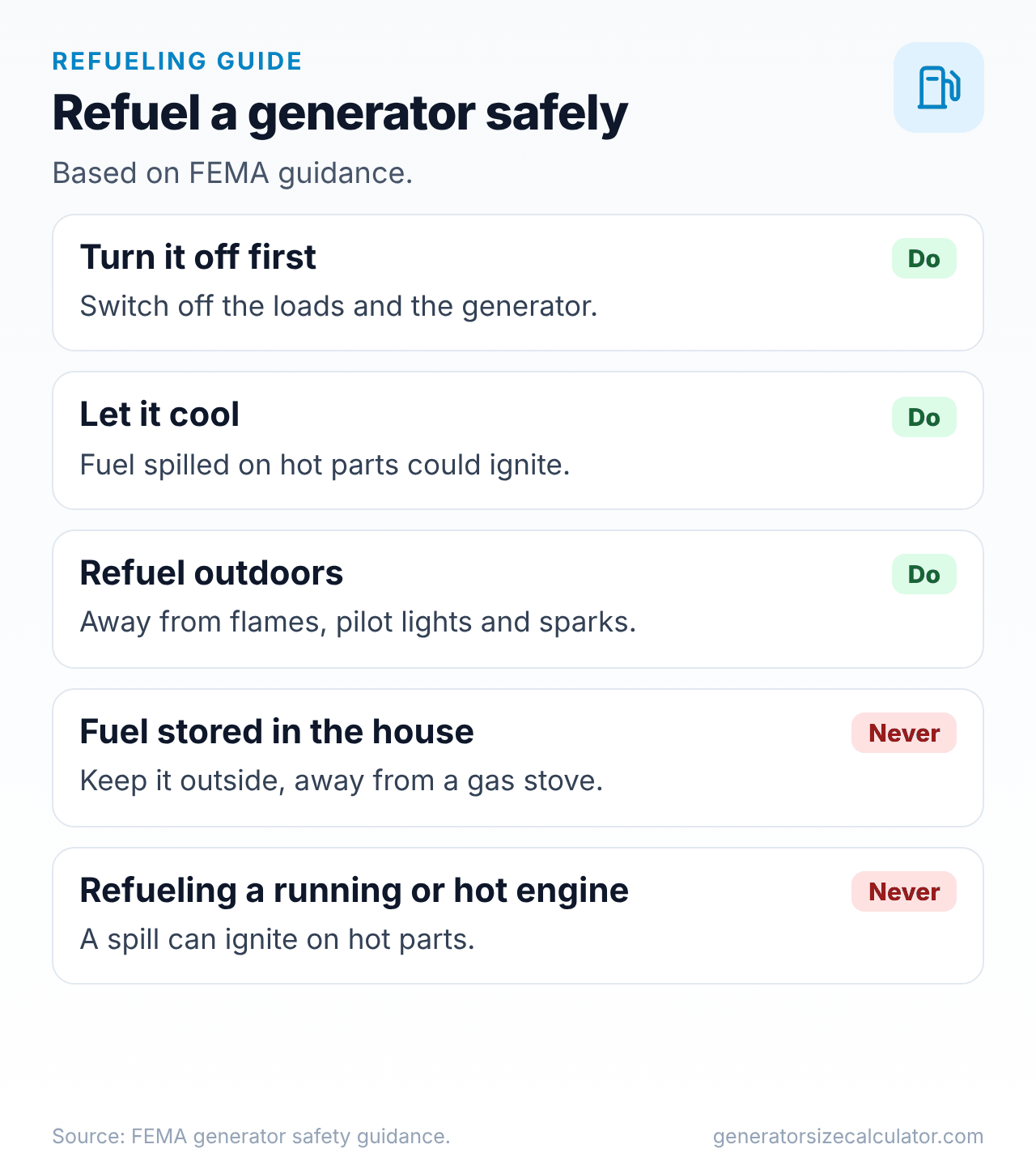
Quick answer: FEMA says to turn the generator off and let it cool before refueling, because fuel spilled on hot engine parts could ignite. It also says to keep the generator and its fuel outside, and not to store generator fuel in the house or near a fuel-burning appliance such as a gas stove. That means refueling is a planned stop, so plan the fuel before the outage.
The main rule
FEMA's guidance is short and clear: before refueling a generator, turn it off and let it cool. The engine and exhaust get very hot, and fuel spilled on hot parts could ignite. This is the one rule people break most, because it is annoying to lose power mid-outage. A generator with a fuel gauge or a larger tank helps you refuel on your schedule instead of in a hurry.
Steps in order
- Unplug the loads or switch them off, so the generator shuts down under no load.
- Turn the generator off and let it cool, following the owner's manual for how long.
- Refuel outdoors, in the open air, away from flames, pilot lights, cigarettes and sparks.
- Pour slowly and do not overfill, leaving room in the tank for the fuel to expand. Wipe up any spill and let it dry before starting.
- Restart, then reconnect the loads one at a time.
Where to keep fuel
FEMA says to keep the generator and its fuel outside. Do not store generator fuel in your house, and do not keep it near a fuel-burning appliance such as a gas stove. Use containers made for fuel and follow your local rules for the amount you may store. Fuel keeps better in a closed container out of the sun, and gasoline stored for months may need a stabilizer, so check your generator's manual.
Plan the fuel before the outage
- Know your runtime. See how long a generator runs on a tank of gas and the generator runtime calculator.
- Estimate the total. Use the fuel consumption calculator and the fuel tank size calculator.
- Consider propane. It stores longer. See propane vs gasoline generators.
- Run it in blocks if you can, to save fuel and to give yourself planned refueling stops.
Estimate how much fuel an outage will use.
Never refuel a running or hot generator, and never store fuel in the house. Carbon monoxide has no smell or color. If a carbon monoxide alarm sounds, or anyone feels dizzy, has a headache or feels sick while a generator is running, get to fresh air and call 911. See how far a generator should be from your house.
Frequently asked questions
Can you refuel a generator while it is running?
No. FEMA says to turn it off and let it cool first, because fuel spilled on hot engine parts could ignite.
How long should a generator cool before refueling?
FEMA does not give a time. Follow your owner's manual and wait until the engine and exhaust are no longer hot to the touch.
Where should I store generator fuel?
Outside, in containers made for fuel, according to FEMA. Not in the house and not near a fuel-burning appliance such as a gas stove.
Can I refuel a generator in the garage?
No. The CPSC says never to run a generator in a garage, and FEMA says to keep the generator and its fuel outside.
How do I avoid refueling in the dark?
Refuel before dark if you can, use a headlamp or a flashlight placed away from the fuel, and plan the run times.
Related calculators
Sources: FEMA, generator safety (turn off and let cool before refueling, fuel spilled on hot parts could ignite, keep generator and fuel outside, not near a fuel-burning appliance such as a gas stove); U.S. Consumer Product Safety Commission, portable generator safety and carbon monoxide statistics (never run a generator in a garage). Steps beyond FEMA's statements are general practice, so follow your owner's manual.