Do You Need to Rejet a Generator for High Altitude?
By the Generator Size Calculator Team · Updated · 5 min read
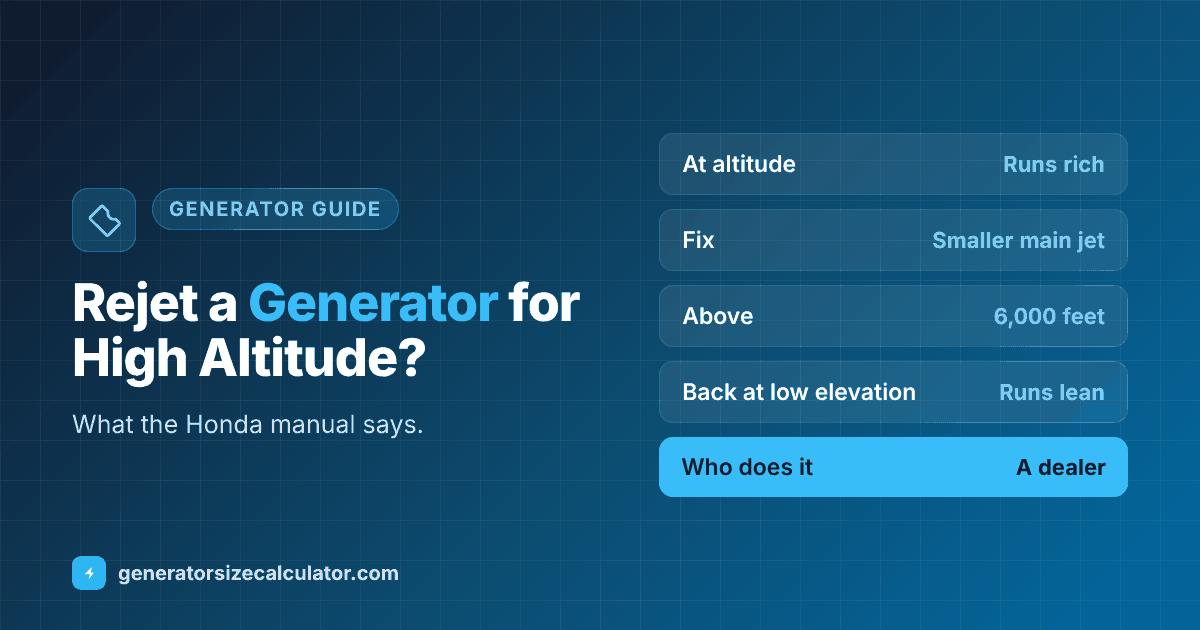
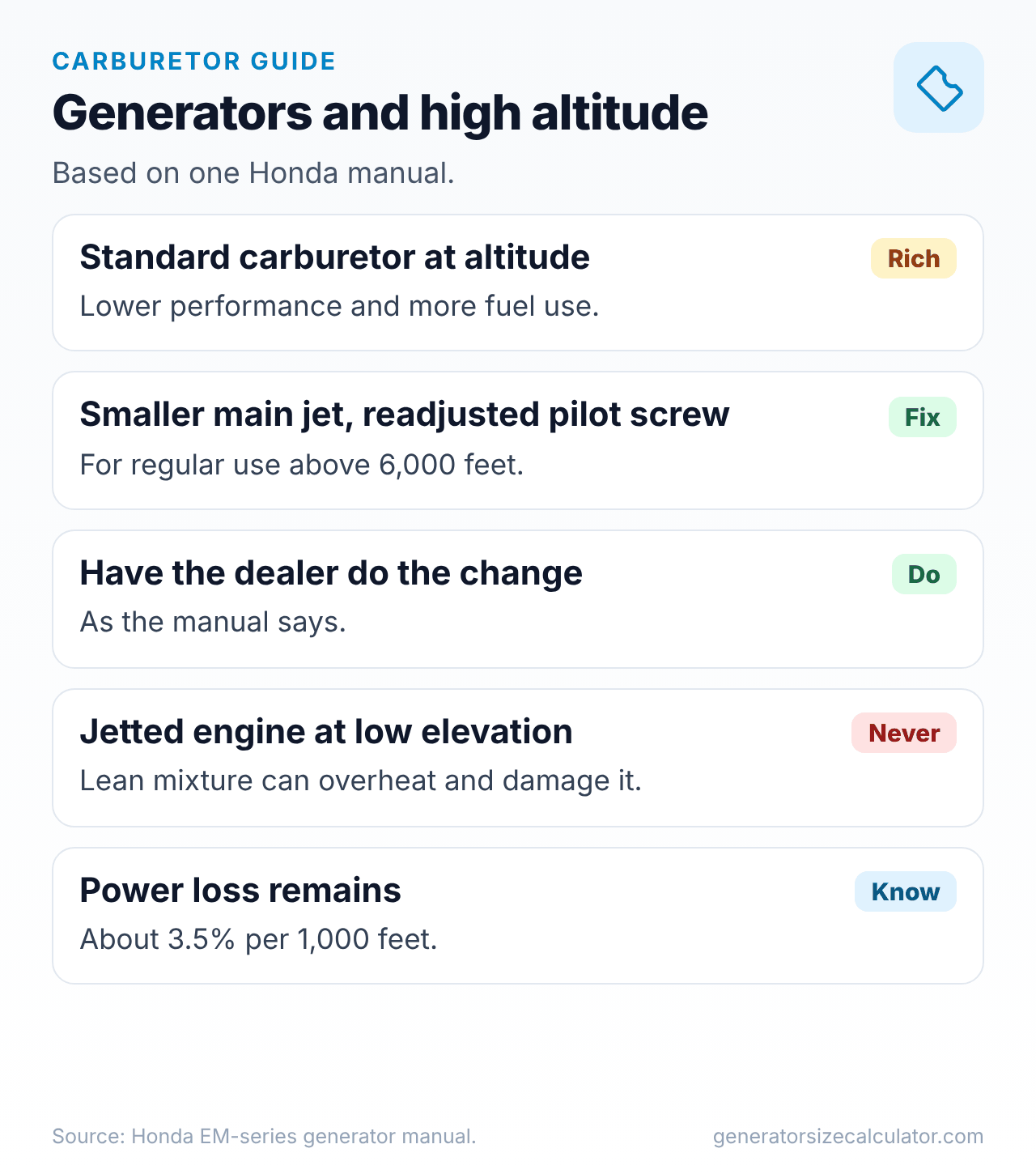
Quick answer: The Honda manual says at high altitude the standard carburetor air-fuel mixture will be excessively rich, which lowers performance and raises fuel use. The fix is a smaller main fuel jet and a readjusted pilot screw, and it says to have a dealer do it if you always operate above 6,000 feet. The warning on the other side: running a jetted engine below its intended altitude can cause a lean mixture, overheating and serious engine damage.
Your manual comes first. This page uses figures from one Honda generator manual (the EM1600X, EM1800X and EM2200X, with a GX140 engine). Other engines, and fuel-injected or inverter models, can behave differently, so check your own owner's manual.
Why altitude changes the mixture
A carburetor is set to mix air and fuel in the right proportion at a certain elevation. Higher up, the air is thinner, so the same amount of fuel makes the mixture too rich. The Honda manual says this lowers performance and raises fuel use. Fuel-injected engines can adjust to a degree, which is why you should check how yours is built.
When to rejet
Honda's fix is a smaller main fuel jet and a readjusted pilot screw. The manual says that if you always operate the generator at altitudes higher than 6,000 feet above sea level, your dealer should make these modifications. Even with them, power still falls about 3.5% per 1,000 feet, though the loss is greater without the change. See generator power loss at high altitude.
The risk of going back down
The same manual warns that operating the generator below the altitude it is jetted for can cause reduced performance, overheating and serious engine damage from an excessively lean air-fuel mixture. If you jet for the mountains and then take the generator to the coast, switch it back first. That makes a high-altitude kit a poor choice for a generator that travels between very different elevations.
Tips
- Use a dealer for the change, as the manual says.
- Write the jetted elevation on the generator, so you remember.
- Size up instead if you only visit high places now and then. A bigger generator with the standard carburetor may be simpler. Use the portable generator calculator.
- Ask the maker. Some models list their own altitude limits and kits.
Add your loads and size up for altitude.
Run the generator outdoors, at least 20 feet from the home. Never in a garage or shed. Carbon monoxide has no smell or color. See how far a generator should be from your house.
Frequently asked questions
Do generators run rich at high altitude?
A carbureted engine does. The Honda manual says the standard mixture will be excessively rich at high altitude.
At what altitude should I rejet a generator?
The Honda manual says to have the dealer modify it if you always operate above 6,000 feet.
What does rejetting involve?
A smaller main fuel jet and a readjusted pilot screw, according to the manual.
Is it harmful to run a high-altitude generator at sea level?
It can be. The manual warns of a lean mixture, overheating and serious engine damage below the jetted altitude.
Do inverter generators need rejetting?
It depends on the engine. Many are carbureted, but fuel-injected models can adapt. Check your manual.
Related calculators
Sources: Honda owner's manual for the EM1600X, EM1800X and EM2200X generators (rich mixture at altitude, smaller main fuel jet and readjusted pilot screw, dealer modification above 6,000 feet, lean mixture and overheating below the jetted altitude). Tips are general practice.